Tell us about the job
Takes about a minute. No obligation.
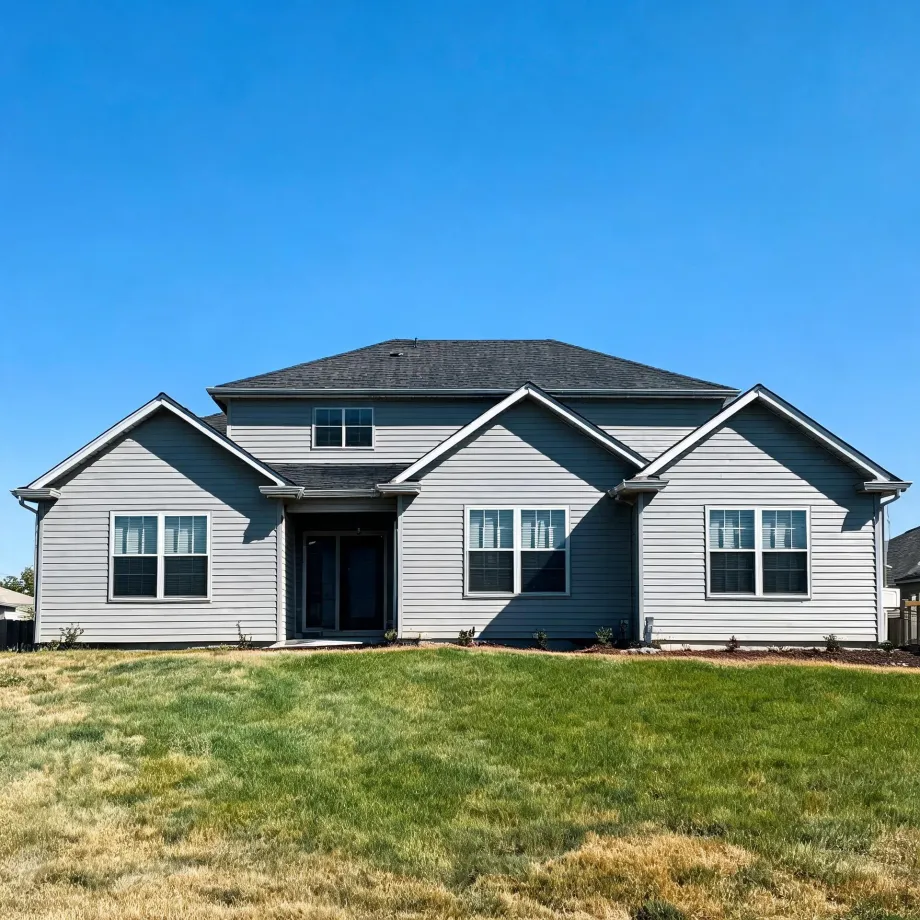
A central AC compressor that never runs still fails. Homes in Rich County, UT have essentially no cooling season — no month of the year is warm enough to call for it. Contactors corrode, capacitors lose charge, and refrigerant seals dry out when a system sits untouched season after season. When a homeowner finally turns the unit on during the rare warm stretch, the compressor is starting cold after a long dormancy, and that is where failures surface. A contractor here checks the electrical components and the refrigerant circuit first, because idle deterioration is the more likely story than accumulated run-hours.
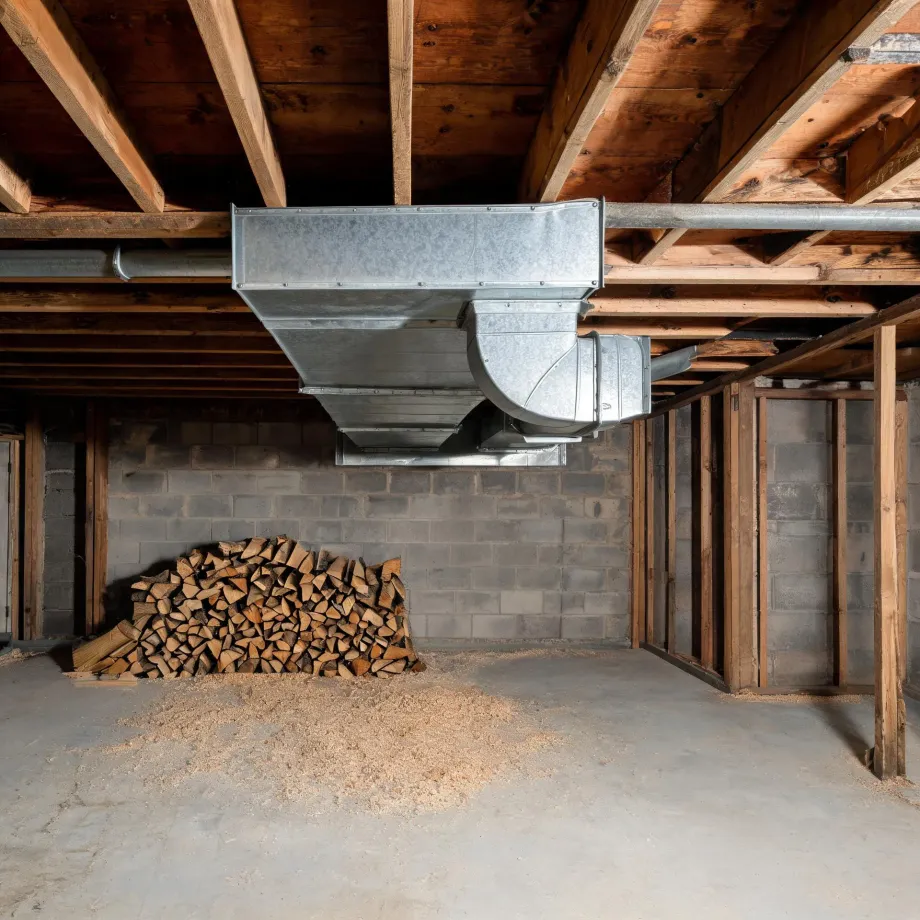
Opened equipment in a house this old can land a contractor somewhere the parts catalog runs thin. Half the homes in Rich County, Utah were built in 1992 or earlier (2020-2024 ACS 5-year). A system that has cycled through more than one replacement over those decades may run components that suppliers have discontinued or stock only on long lead times. What a contractor quotes after opening the unit depends heavily on what they find inside and how deep into the supply chain they have to go to source it.
The Parts of a Central AC a Contractor Checks First
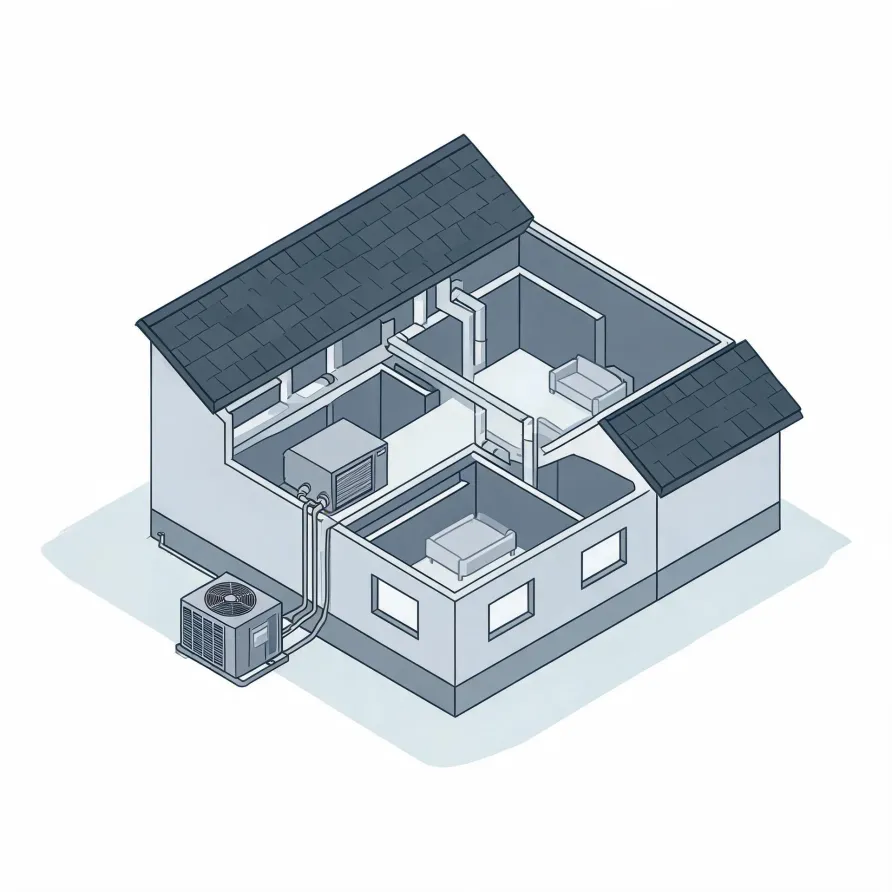
The outdoor condenser unit sits outside the house, usually on a concrete pad beside the foundation, and it carries the compressor and the condenser coil. These two components are where a contractor starts. A compressor that has lost pressure or a coil that is blocked or corroded will stop the whole system from moving heat, so both draw attention before anything else.
Inside the house, the air handler holds the evaporator coil and the blower fan, and it typically lives in a utility closet, attic, or basement. The expansion valve and the refrigerant lines that run between the two units round out the system. A contractor checking an air handler that blows warm air or a fan that runs without cooling will trace those lines and test that valve.
The drawing shows a general layout of the system, and a licensed contractor determines which components apply and what work is needed in your specific home.
Get matched in Rich CountyRich County, Utah, by the numbers
61 severe weather events were recorded in Rich County, Utah between 2015 and 2024.
NOAA National Centers for Environmental Information, Storm Events Database, bulk CSV export, events 2015-01-01 through 2024-12-31.Half the homes in Rich County, Utah were built in 1992 or earlier (2020-2024 ACS 5-year).
U.S. Census Bureau, 2020-2024 American Community Survey 5-Year EstimatesRich County, Utah holds 3,373 housing units (2020-2024 ACS 5-year).
U.S. Census Bureau, 2020-2024 American Community Survey 5-Year EstimatesOwners occupy 84.7% of the occupied homes in Rich County, Utah (2020-2024 ACS 5-year).
U.S. Census Bureau, 2020-2024 American Community Survey 5-Year EstimatesCodes & Standards Governing Central AC Repair in Rich County, Utah10 sourced rules and standards
What the repair visit looks like
Split-system central air conditioners rated below 45,000 Btu/h manufactured on or after January 1, 2023 must meet a federal minimum of 13.4 SEER2.
Split-system central air conditioners rated at or above 45,000 Btu/h manufactured on or after January 1, 2023 must meet a federal minimum of 13.4 SEER2.
Split-system central air conditioners manufactured between January 1, 2015 and December 31, 2022 had to meet 13 SEER, the metric that preceded SEER2.
Single-package central air conditioners manufactured on or after January 1, 2023 must meet a federal minimum of 13.4 SEER2.
Space-constrained central air conditioners manufactured on or after January 1, 2023 must meet a federal minimum of 11.7 SEER2.
Federal efficiency standards for split-system central air conditioners and heat pumps are set on each certified combination of outdoor unit and indoor coil rather than on the outdoor unit alone.
Residential and light commercial air conditioning and heat pump systems assembled in the field, including mini-splits and unitary systems, may not be installed on or after January 1, 2025 using a refrigerant with a global warming potential above 700.
A field-assembled system whose specified components were all manufactured or imported before January 1, 2025 carries no installation compliance date under the refrigerant restrictions and may still be installed.
Licensing and Legal Requirements in Rich County, Utah
Utah’s contractor licence does not reach alteration, repair, remodelling or improvement of a building worth less than $7,000 in labour and materials together, counting every change and addition to the agreed work — though the plumbing and electrical trades are pulled back under licensure even below that figure.
Utah requires a state licence before engaging in a licensed construction trade or contracting activity, and HVAC contractor is one of the licence classifications the state issues.
Severe Weather Events in Rich County
Extreme weather puts real stress on central AC systems, pushing them harder and wearing components faster. How often that stress hits here shapes what local repair work looks like and how quickly a system can deteriorate.
61 severe weather events, 2015–2024. Source: NOAA National Centers for Environmental Information, Storm Events Database.