Tell us about the job
Takes about a minute. No obligation.
A compressor sitting unused through every month of the year develops its own failure points: seized contactors, degraded capacitors, refrigerant that has migrated while the system stood cold. Homes in Wasatch County, UT have essentially no cooling season — no month of the year is warm enough to call for it. That idle history is what a contractor is checking when a unit fails to start on the first genuinely warm day. Wear on run hours matters less here than the condition of parts that were never cycled through a season to begin with.
Central AC systems get repaired around what they actually contain, and in Wasatch County that question starts inside the unit. Half the homes in Wasatch County, Utah were built in 2005 or earlier (2020-2024 ACS 5-year). Housing stock of that age was built and ducted for whatever cooling equipment was standard at the time, and the systems running in those houses today are often not the original ones. When a technician opens a unit, what determines the repair scope is whether the compressor, capacitor, or refrigerant type the system takes still has parts in circulation. Some do. Some require a search, a substitution, or a conversation about what a repair actually buys.
The Parts of a Central AC a Contractor Checks During Repair
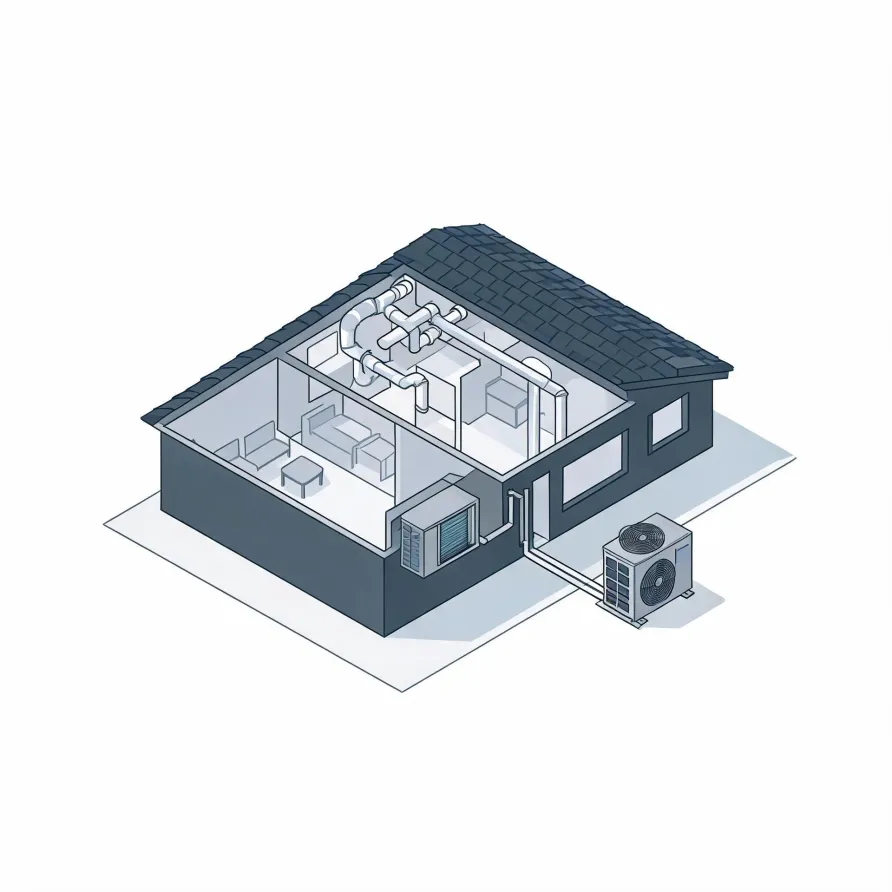
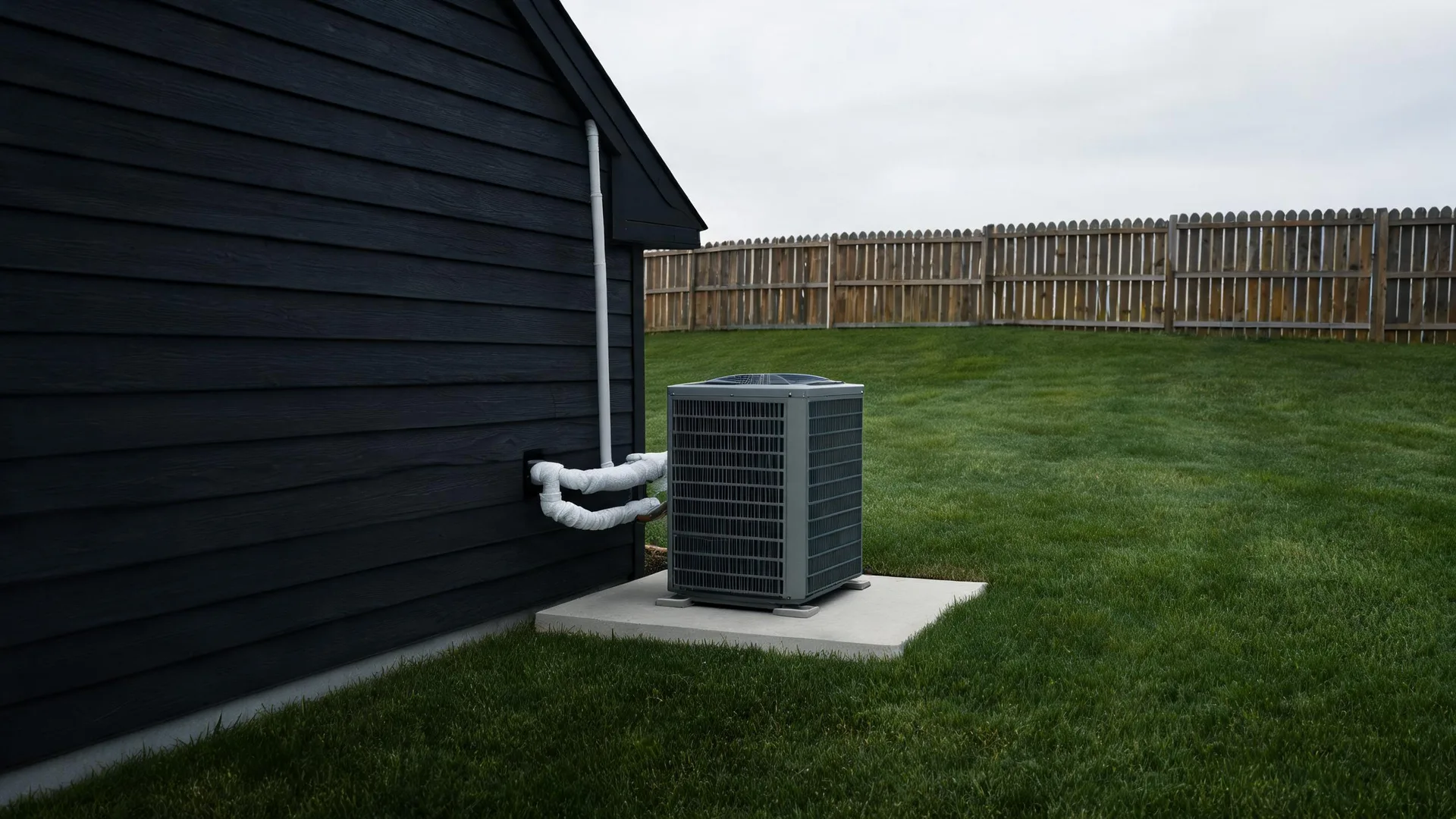
The outdoor condenser unit sits outside the house and holds the compressor and condenser coil. The compressor is usually the first thing a contractor looks at when the system runs but does not cool, and the condenser coil gets examined when the unit is running hot or shutting off early.
Inside the house, the air handler or furnace cabinet holds the evaporator coil and the blower. A frozen evaporator coil or a failing blower motor points a contractor toward that cabinet, while the refrigerant lines connecting the two units are checked when cooling loss has no obvious cause at either end.
The drawing shows a typical central AC layout, and a licensed contractor determines which components apply to your specific system and what repair each one needs.
Get matched in Wasatch CountyWasatch County, by the numbers
144 severe weather events were recorded in Wasatch County, Utah between 2015 and 2024.
NOAA National Centers for Environmental Information, Storm Events Database, bulk CSV export, events 2015-01-01 through 2024-12-31.Half the homes in Wasatch County, Utah were built in 2005 or earlier (2020-2024 ACS 5-year).
U.S. Census Bureau, 2020-2024 American Community Survey 5-Year EstimatesWasatch County, Utah holds 16,228 housing units (2020-2024 ACS 5-year).
U.S. Census Bureau, 2020-2024 American Community Survey 5-Year EstimatesOwners occupy 80.3% of the occupied homes in Wasatch County, Utah (2020-2024 ACS 5-year).
U.S. Census Bureau, 2020-2024 American Community Survey 5-Year EstimatesCodes & Standards Governing Central AC Repair in Wasatch County, Utah10 sourced rules and standards
What HVAC Repair Looks Like in Wasatch County
Split-system central air conditioners rated below 45,000 Btu/h manufactured on or after January 1, 2023 must meet a federal minimum of 13.4 SEER2.
Split-system central air conditioners rated at or above 45,000 Btu/h manufactured on or after January 1, 2023 must meet a federal minimum of 13.4 SEER2.
Split-system central air conditioners manufactured between January 1, 2015 and December 31, 2022 had to meet 13 SEER, the metric that preceded SEER2.
Single-package central air conditioners manufactured on or after January 1, 2023 must meet a federal minimum of 13.4 SEER2.
Space-constrained central air conditioners manufactured on or after January 1, 2023 must meet a federal minimum of 11.7 SEER2.
Federal efficiency standards for split-system central air conditioners and heat pumps are set on each certified combination of outdoor unit and indoor coil rather than on the outdoor unit alone.
Residential and light commercial air conditioning and heat pump systems assembled in the field, including mini-splits and unitary systems, may not be installed on or after January 1, 2025 using a refrigerant with a global warming potential above 700.
A field-assembled system whose specified components were all manufactured or imported before January 1, 2025 carries no installation compliance date under the refrigerant restrictions and may still be installed.
Licensing and Legal Requirements in Wasatch County, Utah
Utah’s contractor licence does not reach alteration, repair, remodelling or improvement of a building worth less than $7,000 in labour and materials together, counting every change and addition to the agreed work — though the plumbing and electrical trades are pulled back under licensure even below that figure.
Utah requires a state licence before engaging in a licensed construction trade or contracting activity, and HVAC contractor is one of the licence classifications the state issues.
Severe Weather Events in Wasatch County
Extreme weather puts mechanical stress on central AC systems, and the pattern of that stress is not the same everywhere. Repair needs in Wasatch County reflect what the local climate actually does to equipment over time.
144 severe weather events, 2016–2024. Source: NOAA National Centers for Environmental Information, Storm Events Database.