Tell us about the job
Takes about a minute. No obligation.
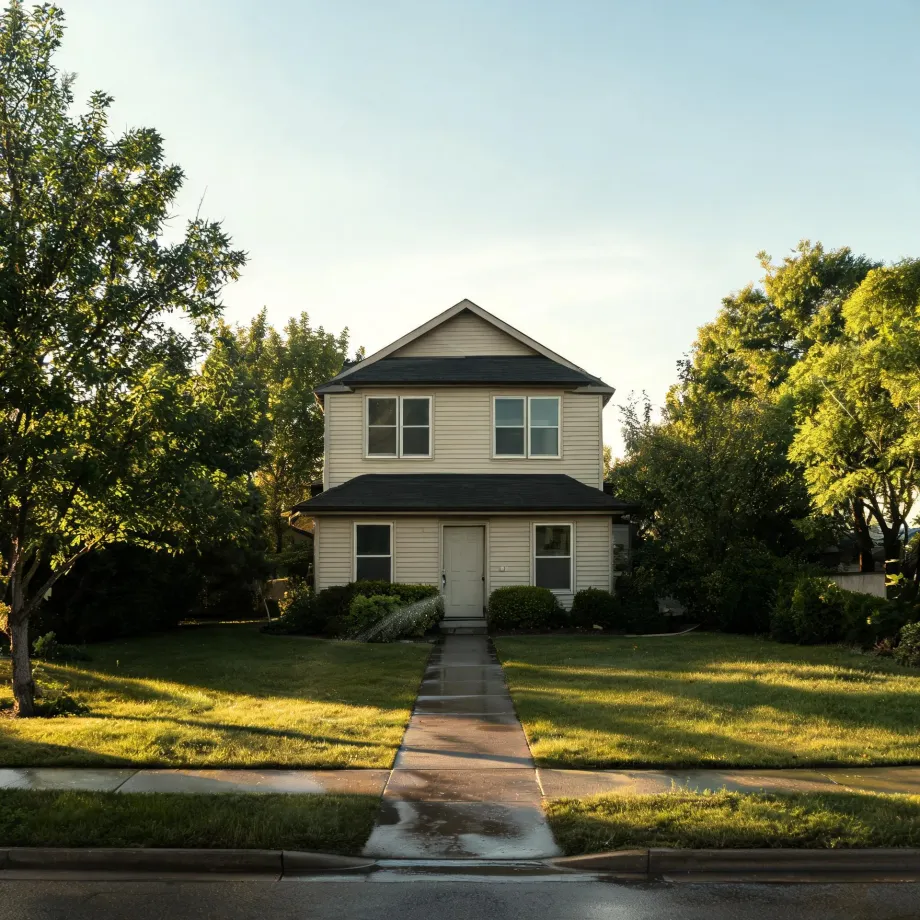
A contractor diagnosing a central AC failure in Wayne County has to separate wear from neglect before they can quote the repair. Homes in Wayne County, UT run cooling about three months a year, from June through August. The compressor, the contactor, and the condenser fan motor sit idle through most of the year, so the cycling load they carry stays modest. What tends to fail here is what was already marginal: a refrigerant charge that was slightly off at the last service, a contactor whose pitting was never caught, a unit that was undersized from the start and ran hard through every hot day it did see. The contractor checks those items first.
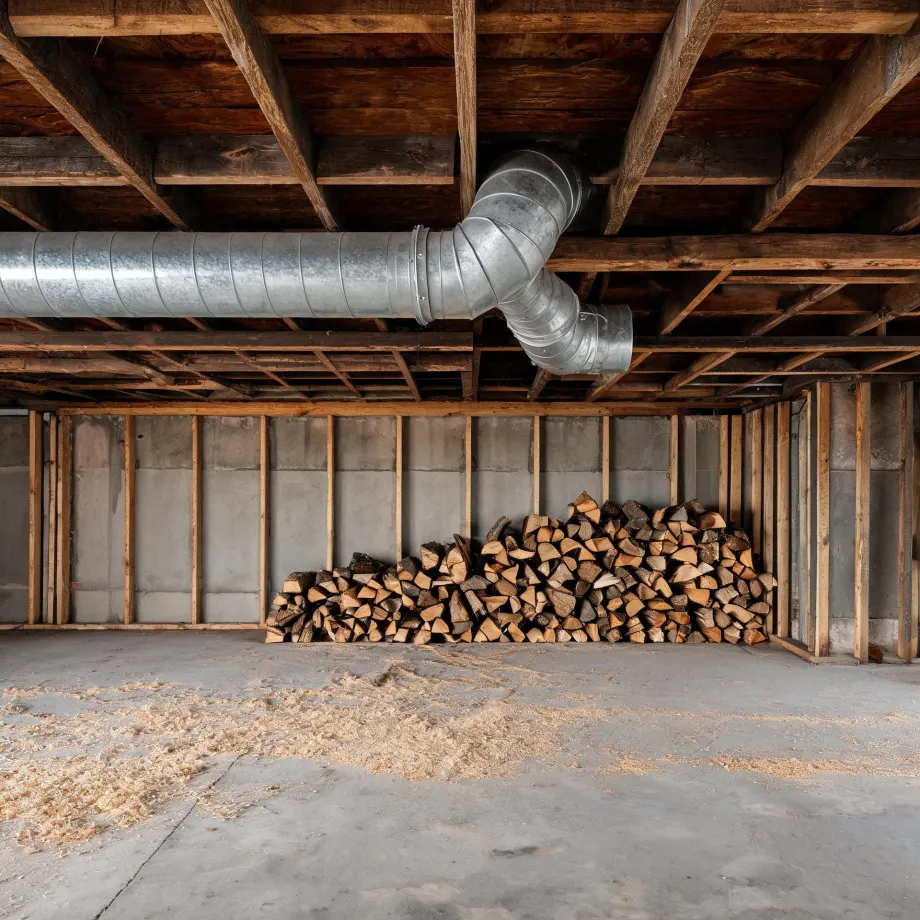
Stock built to the standard of that era was ducted and wired for equipment that long since left production. Half the homes in Wayne County, Utah were built in 1985 or earlier (2020-2024 ACS 5-year). A contractor who opens a failing central AC unit in this county is not simply deciding what broke. They are finding out whether the compressor, the metering device, or the control board it takes is still manufactured, or whether a parts search leads to a supplier who has one left on a shelf somewhere. That answer changes the repair scope before any labor estimate is written.
The Parts of a Central AC a Contractor Checks First
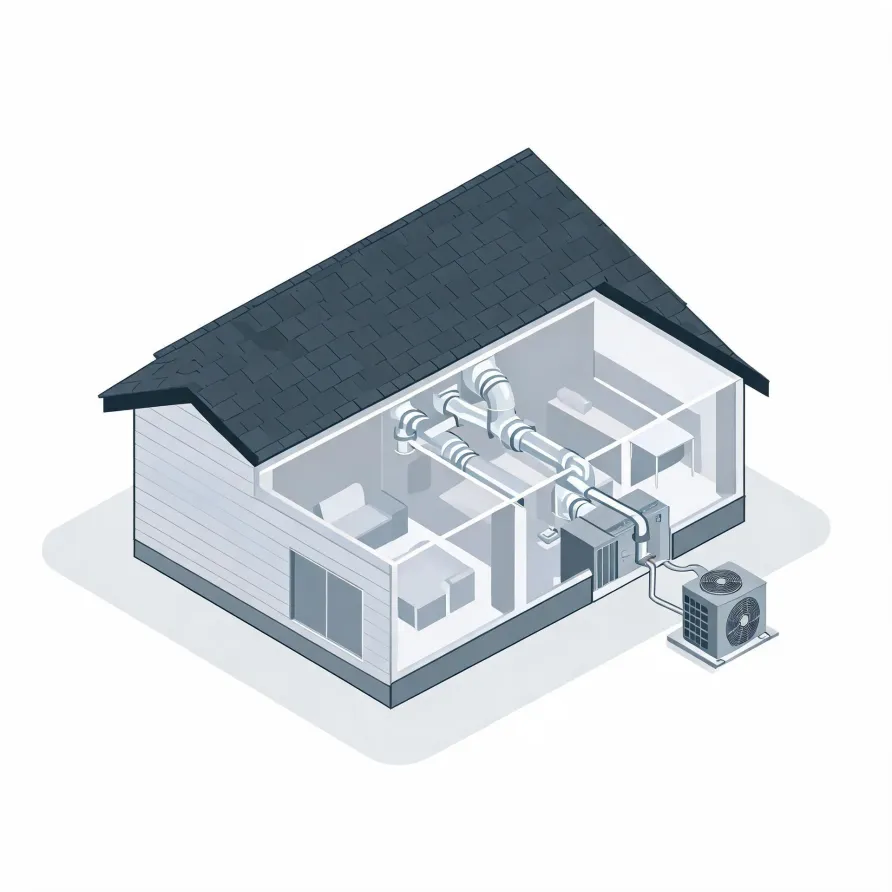
The outdoor condenser unit sits outside the house, usually on a concrete pad at the side or rear, and it carries the compressor and condenser coil. These are the pieces a contractor reaches first when a system stops cooling. The compressor is the most worked component in the system, and a failed one is a common reason a call gets made.
Inside the house, the air handler or furnace cabinet holds the evaporator coil and the blower fan, typically in a basement, utility closet, or attic. The evaporator coil is where refrigerant does its work, and a dirty or leaking coil shows up fast as a cooling problem. The refrigerant lines that connect the two cabinets, and the thermostat on the wall, are also on a contractor's checklist.
The drawing shows a typical layout, and a licensed contractor determines what applies to this particular house.
Get matched in Wayne CountyWayne County, Utah, by the numbers
37 severe weather events were recorded in Wayne County, Utah between 2015 and 2024.
NOAA National Centers for Environmental Information, Storm Events Database, bulk CSV export, events 2015-01-01 through 2024-12-31.Half the homes in Wayne County, Utah were built in 1985 or earlier (2020-2024 ACS 5-year).
U.S. Census Bureau, 2020-2024 American Community Survey 5-Year EstimatesWayne County, Utah holds 1,735 housing units (2020-2024 ACS 5-year).
U.S. Census Bureau, 2020-2024 American Community Survey 5-Year EstimatesOwners occupy 79.3% of the occupied homes in Wayne County, Utah (2020-2024 ACS 5-year).
U.S. Census Bureau, 2020-2024 American Community Survey 5-Year EstimatesCodes & Standards Covering Central AC Repair in Wayne County, Utah10 sourced rules and standards
What HVAC Repair Looks Like in Wayne County
Split-system central air conditioners rated below 45,000 Btu/h manufactured on or after January 1, 2023 must meet a federal minimum of 13.4 SEER2.
Split-system central air conditioners rated at or above 45,000 Btu/h manufactured on or after January 1, 2023 must meet a federal minimum of 13.4 SEER2.
Split-system central air conditioners manufactured between January 1, 2015 and December 31, 2022 had to meet 13 SEER, the metric that preceded SEER2.
Single-package central air conditioners manufactured on or after January 1, 2023 must meet a federal minimum of 13.4 SEER2.
Space-constrained central air conditioners manufactured on or after January 1, 2023 must meet a federal minimum of 11.7 SEER2.
Federal efficiency standards for split-system central air conditioners and heat pumps are set on each certified combination of outdoor unit and indoor coil rather than on the outdoor unit alone.
Residential and light commercial air conditioning and heat pump systems assembled in the field, including mini-splits and unitary systems, may not be installed on or after January 1, 2025 using a refrigerant with a global warming potential above 700.
A field-assembled system whose specified components were all manufactured or imported before January 1, 2025 carries no installation compliance date under the refrigerant restrictions and may still be installed.
Licensing and Legal Requirements in Wayne County, Utah
Utah’s contractor licence does not reach alteration, repair, remodelling or improvement of a building worth less than $7,000 in labour and materials together, counting every change and addition to the agreed work — though the plumbing and electrical trades are pulled back under licensure even below that figure.
Utah requires a state licence before engaging in a licensed construction trade or contracting activity, and HVAC contractor is one of the licence classifications the state issues.
Severe Weather Events in Wayne County
Weather puts work on AC equipment. The harder the local climate runs a system, the more wear it accumulates, and repair needs in Wayne County follow that pattern.
37 severe weather events, 2015–2024. Source: NOAA National Centers for Environmental Information, Storm Events Database.