Tell us about the job
Takes about a minute. No obligation.
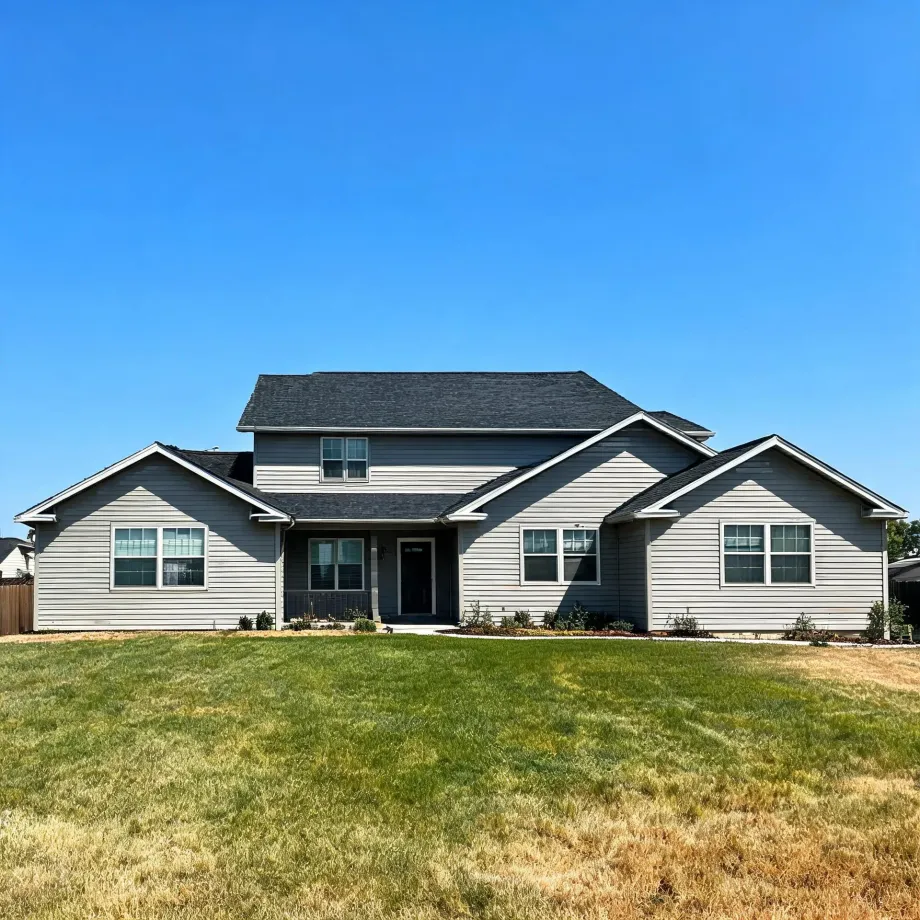
A Central AC compressor in Uintah County logs very little annual runtime before a contractor is asked to diagnose it. Homes in Uintah County, UT run cooling in a single month of the year, July. The contactor, capacitor, and condenser fan carry the same compressed workload, cycling hard through a tight window rather than spreading starts and stops across a long season. When one of those parts fails, age and manufacturing defect are the first things a contractor prices out, because the equipment simply has not run long enough for wear to be the obvious culprit. A fault that hid through the idle months shows itself on the first hot day, and that is the diagnostic starting point.
Repair work on older stock depends less on diagnosing the fault than on what a contractor finds when the unit comes open. Half the homes in Uintah County, Utah were built in 1992 or earlier (2020-2024 ACS 5-year). A system running in a house of that vintage may need a capacitor, a contactor, or a control board that a manufacturer stopped producing years ago. When a part is no longer in production, a contractor either sources it through an HVAC salvage channel or recommends replacing the unit. That answer comes from opening the equipment and checking the model number against current parts availability, and it shapes the quote before labor is ever priced.
The Parts of a Central AC a Contractor Checks First
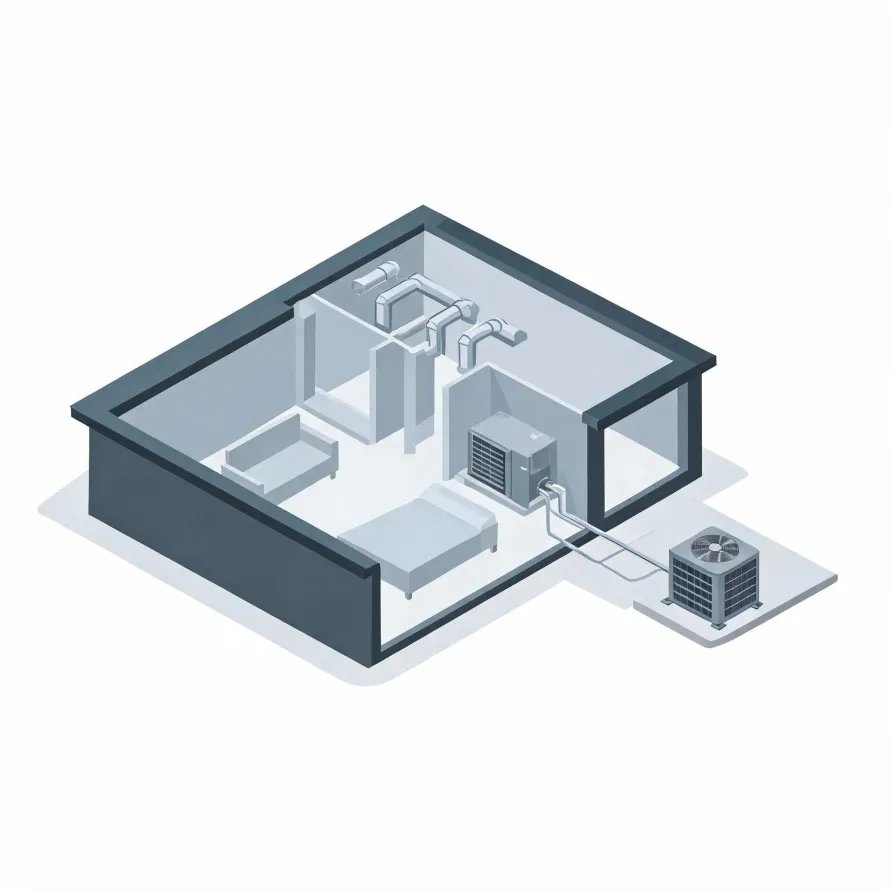
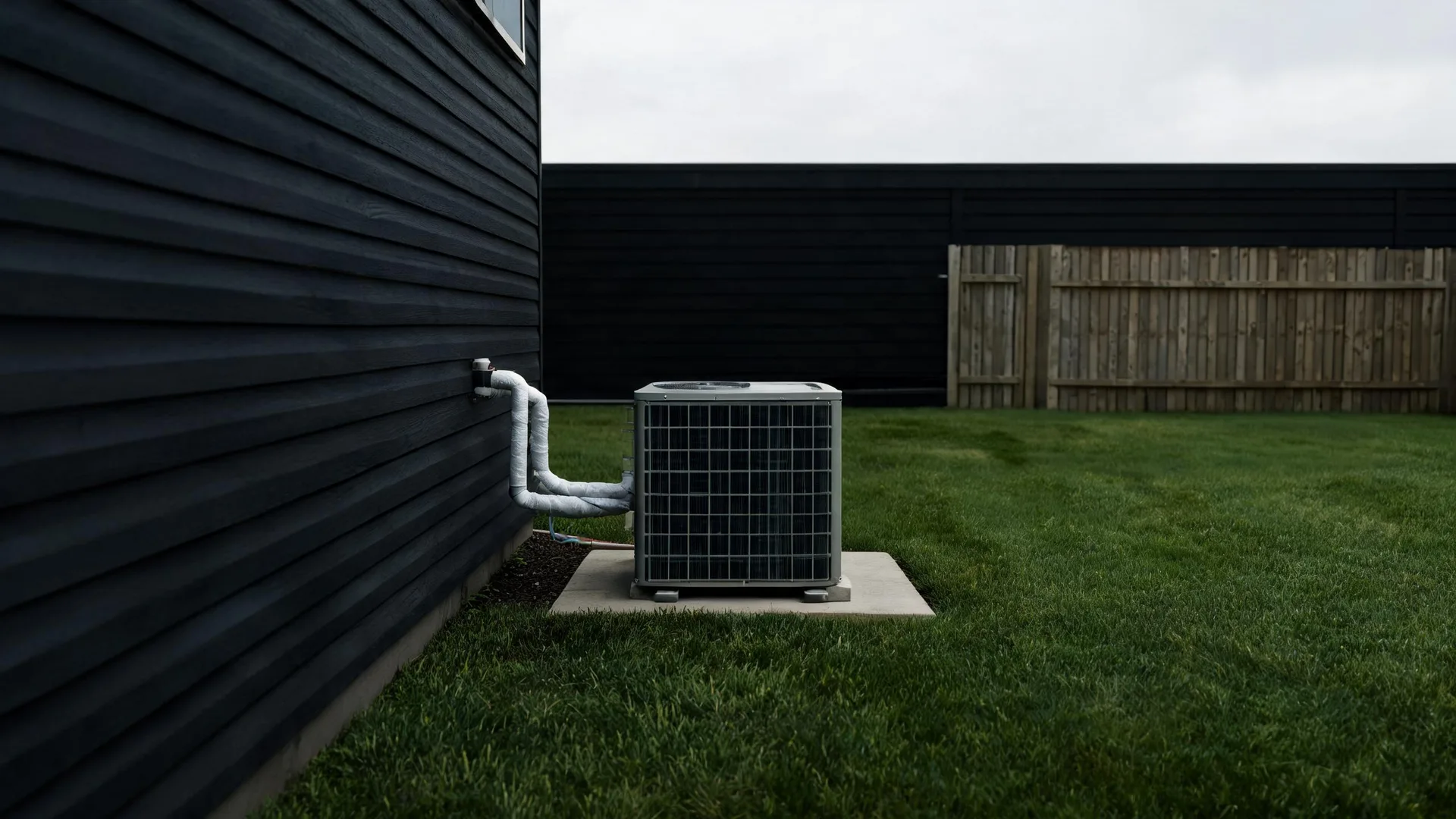
The outdoor condenser unit sits on a pad outside the house and holds the compressor and condenser coil, which together shed the heat pulled from inside. These are the first places a contractor looks when the system stops cooling, runs constantly, or makes a noise it shouldn't. A failed compressor or a coil choked with debris accounts for a large share of repair calls.
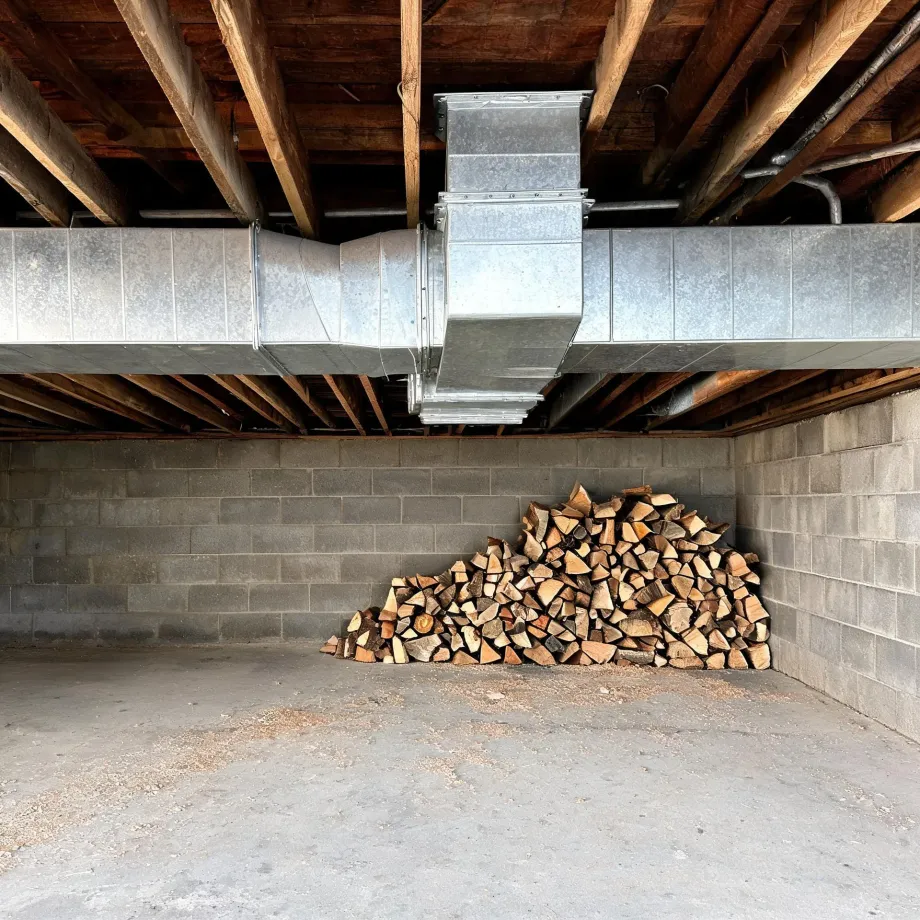
Inside, the air handler or furnace cabinet holds the evaporator coil and the blower, tucked into a closet, basement, or utility room. The evaporator coil absorbs heat from the indoor air, and the blower pushes that air through the house. The refrigerant lines that connect the two units and the expansion valve that controls refrigerant flow are also common points of failure a contractor will examine.
The drawing shows a representative layout, and a licensed contractor determines what applies to this particular house and system.
Get matched in Uintah CountyUintah County, by the numbers
101 severe weather events were recorded in Uintah County, Utah between 2015 and 2024.
NOAA National Centers for Environmental Information, Storm Events Database, bulk CSV export, events 2015-01-01 through 2024-12-31.Half the homes in Uintah County, Utah were built in 1992 or earlier (2020-2024 ACS 5-year).
U.S. Census Bureau, 2020-2024 American Community Survey 5-Year EstimatesUintah County, Utah holds 13,838 housing units (2020-2024 ACS 5-year).
U.S. Census Bureau, 2020-2024 American Community Survey 5-Year EstimatesOwners occupy 73.5% of the occupied homes in Uintah County, Utah (2020-2024 ACS 5-year).
U.S. Census Bureau, 2020-2024 American Community Survey 5-Year EstimatesCodes & Standards Governing Central AC Repair in Uintah County, Utah10 sourced rules and standards
What the Repair Visit Looks Like
Split-system central air conditioners rated below 45,000 Btu/h manufactured on or after January 1, 2023 must meet a federal minimum of 13.4 SEER2.
Split-system central air conditioners rated at or above 45,000 Btu/h manufactured on or after January 1, 2023 must meet a federal minimum of 13.4 SEER2.
Split-system central air conditioners manufactured between January 1, 2015 and December 31, 2022 had to meet 13 SEER, the metric that preceded SEER2.
Single-package central air conditioners manufactured on or after January 1, 2023 must meet a federal minimum of 13.4 SEER2.
Space-constrained central air conditioners manufactured on or after January 1, 2023 must meet a federal minimum of 11.7 SEER2.
Federal efficiency standards for split-system central air conditioners and heat pumps are set on each certified combination of outdoor unit and indoor coil rather than on the outdoor unit alone.
Residential and light commercial air conditioning and heat pump systems assembled in the field, including mini-splits and unitary systems, may not be installed on or after January 1, 2025 using a refrigerant with a global warming potential above 700.
A field-assembled system whose specified components were all manufactured or imported before January 1, 2025 carries no installation compliance date under the refrigerant restrictions and may still be installed.
Licensing Rules for Contractors in Uintah County, Utah
Utah’s contractor licence does not reach alteration, repair, remodelling or improvement of a building worth less than $7,000 in labour and materials together, counting every change and addition to the agreed work — though the plumbing and electrical trades are pulled back under licensure even below that figure.
Utah requires a state licence before engaging in a licensed construction trade or contracting activity, and HVAC contractor is one of the licence classifications the state issues.
Severe Weather Events in Uintah County
Weather puts a measurable load on cooling equipment, and that load compounds over time. Repair needs in Uintah County track closely with what the climate asks of the hardware.
101 severe weather events, 2015–2024. Source: NOAA National Centers for Environmental Information, Storm Events Database.